
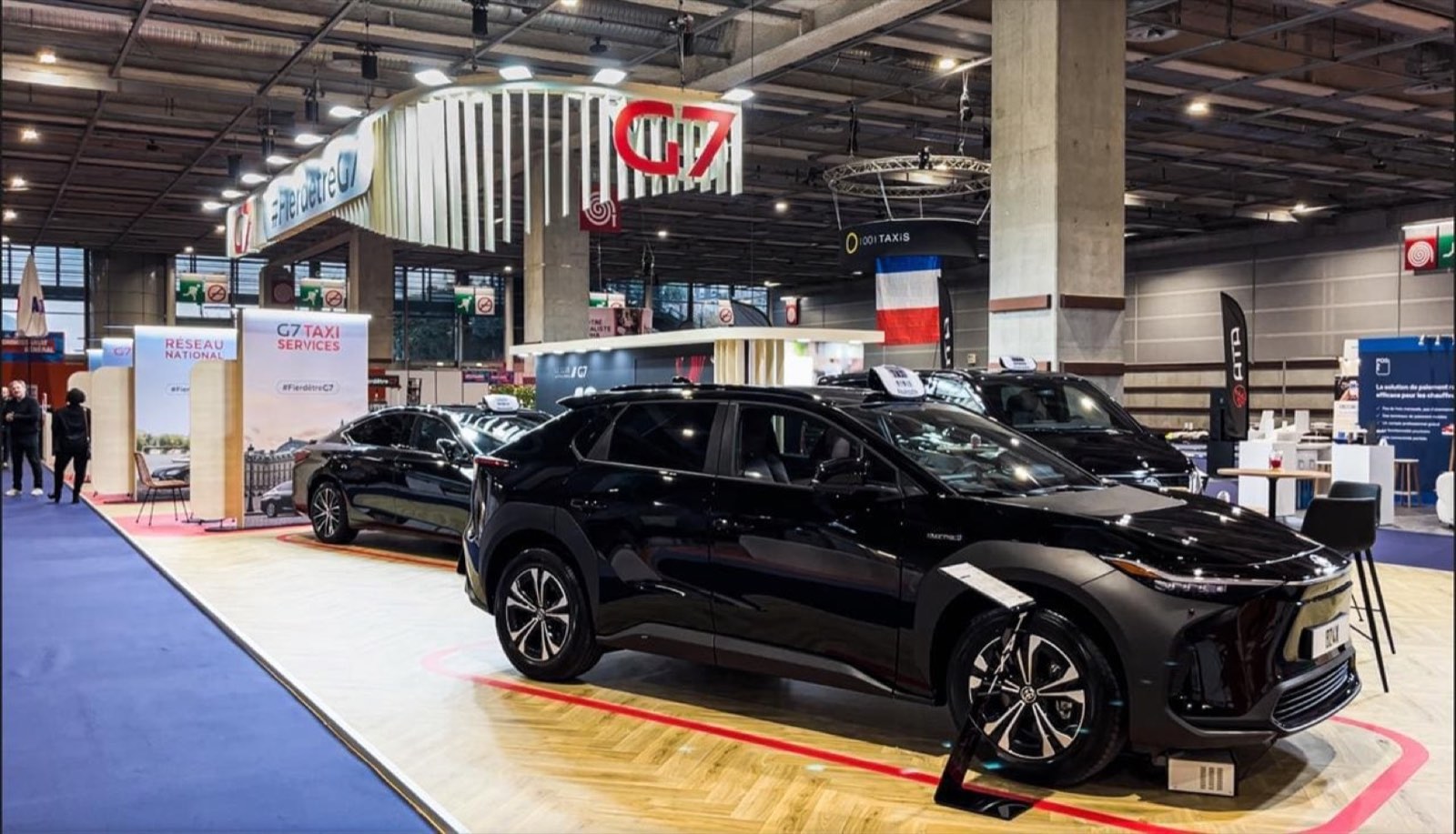
✓In short: a modular stand is a reusable, reconfigurable structure that cuts the cost of exhibiting by 30 to 50% from the fourth
✓In France, according to UNIMEV (Event Data Book 2025, 2024 figures), the professional events sector represents an annual investment of
✓Whether you're exhibiting at a medical congress in Monaco, an industrial show in Lyon or an international event, the modular stand gives you a strategic base
What is a modular stand and how does it work?
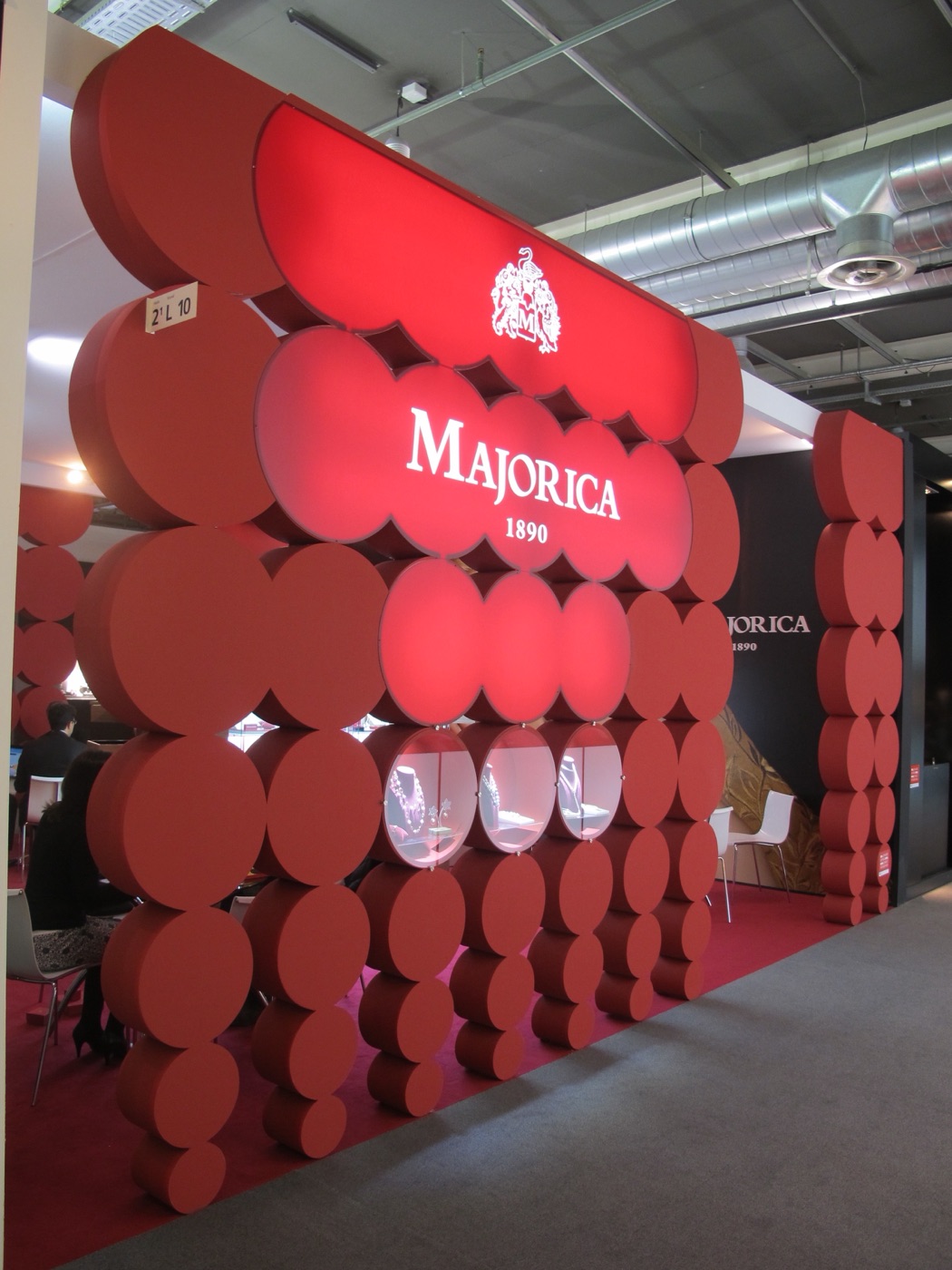
A modular exhibition stand is a structure made up of prefabricated elements (aluminium profiles, fabric panels, interchangeable partitions) that can be assembled, dismantled and reconfigured at will. Unlike a one-off stand designed for a single event, it constitutes a reusable structural asset from one show to the next.
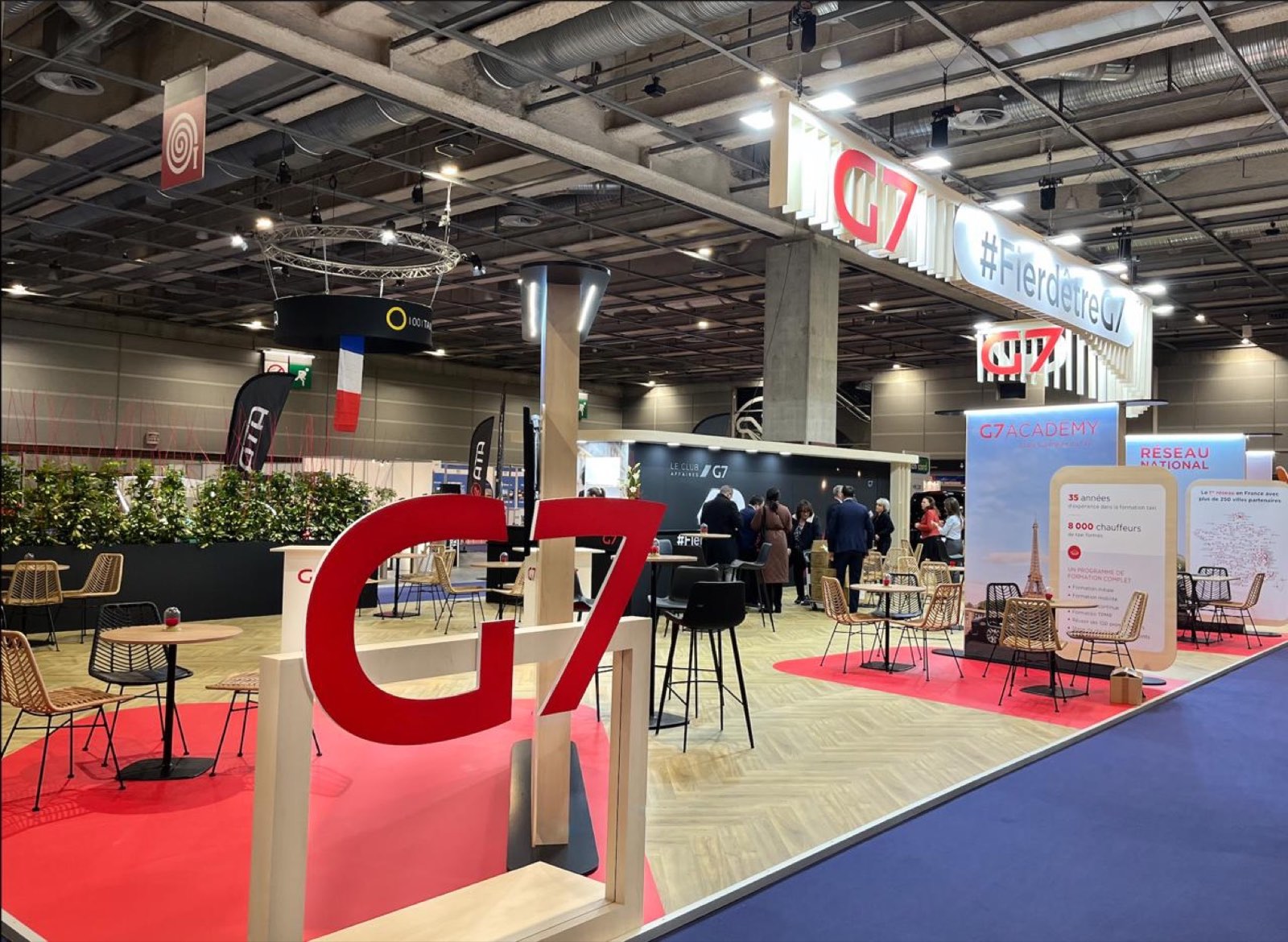
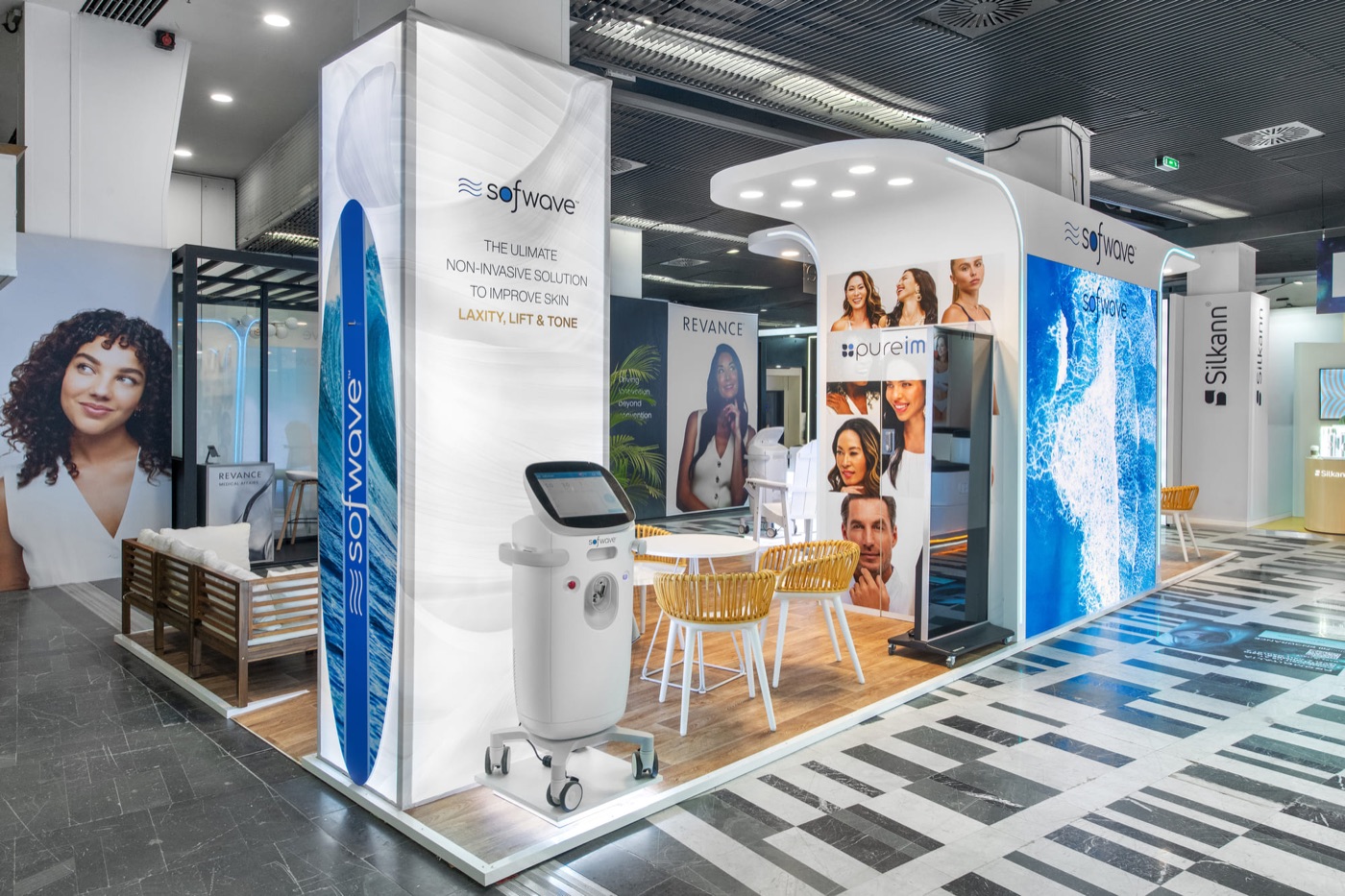
The principle is simple: a standardised technical base acts as the skeleton. The finishes (printed graphics, LED lighting, counters, screens) are added according to the desired configuration. The same kit can therefore work as a 9 m² inline layout, an 18 m² corner or a 36 m²-plus central island.
Transport is a decisive advantage. The elements pack away into dedicated cases or wheeled bags, which allows delivery by van or standard carrier. Assembly, meanwhile, usually takes just a few hours, with no heavy tools required.
Why the modular stand is taking over in 2026
The continuing rise in costs linked to venues, labour and materials is pushing exhibitors to redirect their budgets towards long-term investments such as modular structures and reusable components. In 2026, modular is no longer a budget alternative by default; it has become a deliberate strategic tool.
Three factors are converging to explain this acceleration:
The multi-show strategy: companies no longer concentrate their presence on a single event, but spread their appearances across the year. A single modular set-up covers the whole calendar.
CSR pressure: show organisers are building more and more environmental criteria into their exhibitor rules, encouraging or even requiring the use of reusable structures.
The demand for measurability: senior management wants proof of ROI. A stand amortised over several events makes that demonstration more tangible.
| Type of stand | Key strengths | Who is it for? |
|---|---|---|
| Trade show stand | Bespoke, strong image | Generating B2B leads |
| Modular stand | Reusable, cost-effective | Regular exhibitors |
| Event stand | Immersive staging | Launches, brand experience |
| Double-decker stand | Doubles the floor area | Large shows, limited space |
The five concrete benefits of a modular stand
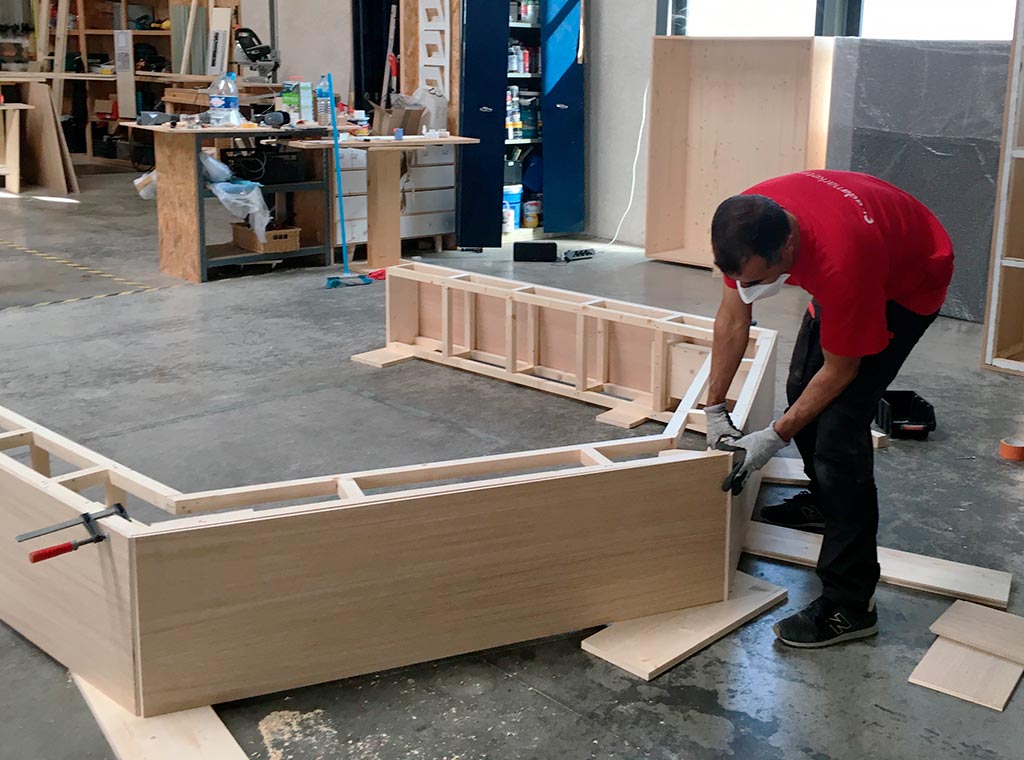
Beyond the trend, what operational benefits can an exhibitor really expect from a modular stand? Here are the five pillars that underpin its relevance.
1. Long-term budget control
The initial investment is admittedly higher than that of a basic single-use stand. However, a reusable modular stand generally pays for itself within three to four events. Beyond that threshold, each additional show represents a net saving on design, build and transport.
2. Adaptability to show configurations
Every show imposes its own constraints: surface area, ceiling height, position (inline, corner, island). The modular stand absorbs these variations thanks to its reconfigurability. You add or remove modules, change the layout and keep visual consistency from one event to the next.
3. Fast assembly and dismantling
Assembly systems using clips, pegs or Velcro strips allow assembly in just a few hours, often without needing an external technical contractor. Dismantling is just as quick, which reduces labour costs and logistical stress.
4. Advanced customisation
Modularity does not rule out design. Today's ranges incorporate backlit lightboxes, high-definition dye-sublimated fabric image walls, bespoke counters and enclosed meeting spaces. That is why our modular trade show stand combines the flexibility of a reconfigurable structure with the visual quality of a premium design.
5. An eco-responsible approach
Reusing rather than rebuilding: the modular stand limits post-event waste. The preferred materials (recyclable aluminium, certified wood, reprintable textiles) reduce the carbon footprint of every appearance.
A stand that looks like you, a show that truly pays off.
Request a quoteModular, bespoke or hybrid stand: how to choose?
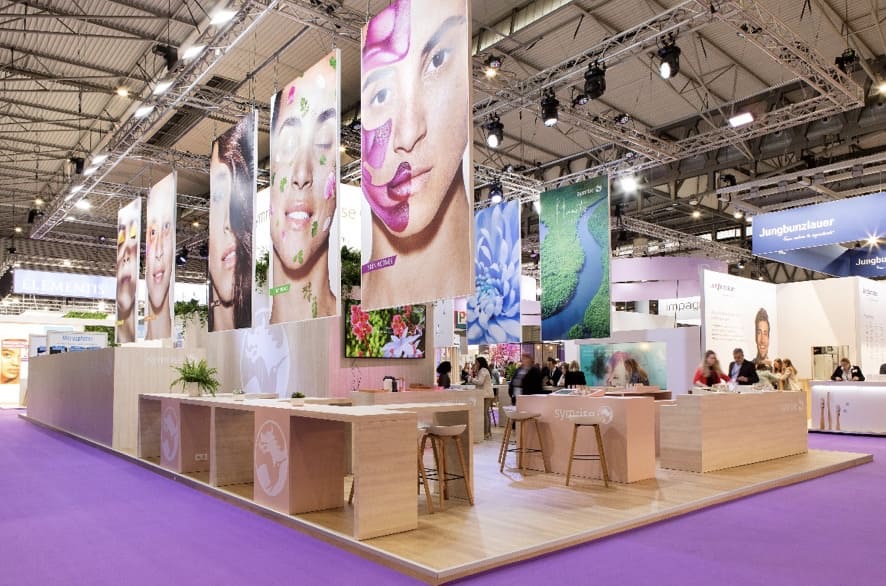
The choice between these three approaches depends on your frequency of participation, your annual budget and your brand objectives. Here is a concise comparison:
Criterion | Standard modular stand | Classic bespoke stand | Hybrid stand (modular + bespoke, the Decore Studio Events approach) |
Reusability | High (5 years or more) | Low (1 to 2 events) | High (reusable modular structure, renewable bespoke elements) |
Customisation | Medium to high | Maximum | Maximum with flexibility |
Cost per event (after amortisation) | Low | High | Moderate |
Assembly time | A few hours | 1 to 3 days | Varies with the configuration |
CSR impact | Strong | Low to medium | Strong |
End-to-end support | Varies | Varies | Complete (brief, 3D, logistics, installation, storage) |
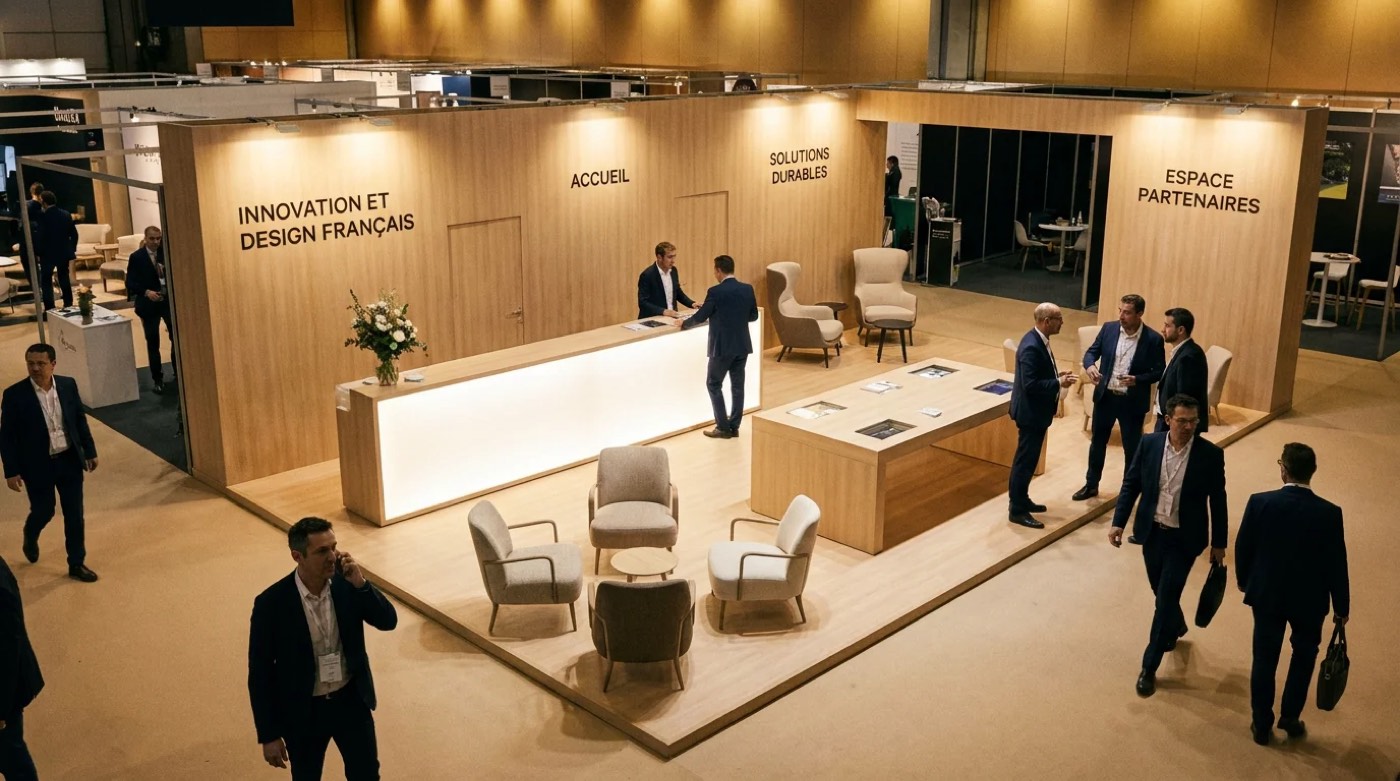
The hybrid approach proves particularly relevant for brands that want a high-end result without giving up reusability. Our trade show stand illustrates this complementarity by integrating joinery or glazed elements into a reconfigurable modular base.
2026 trends: the modular stand moves upmarket
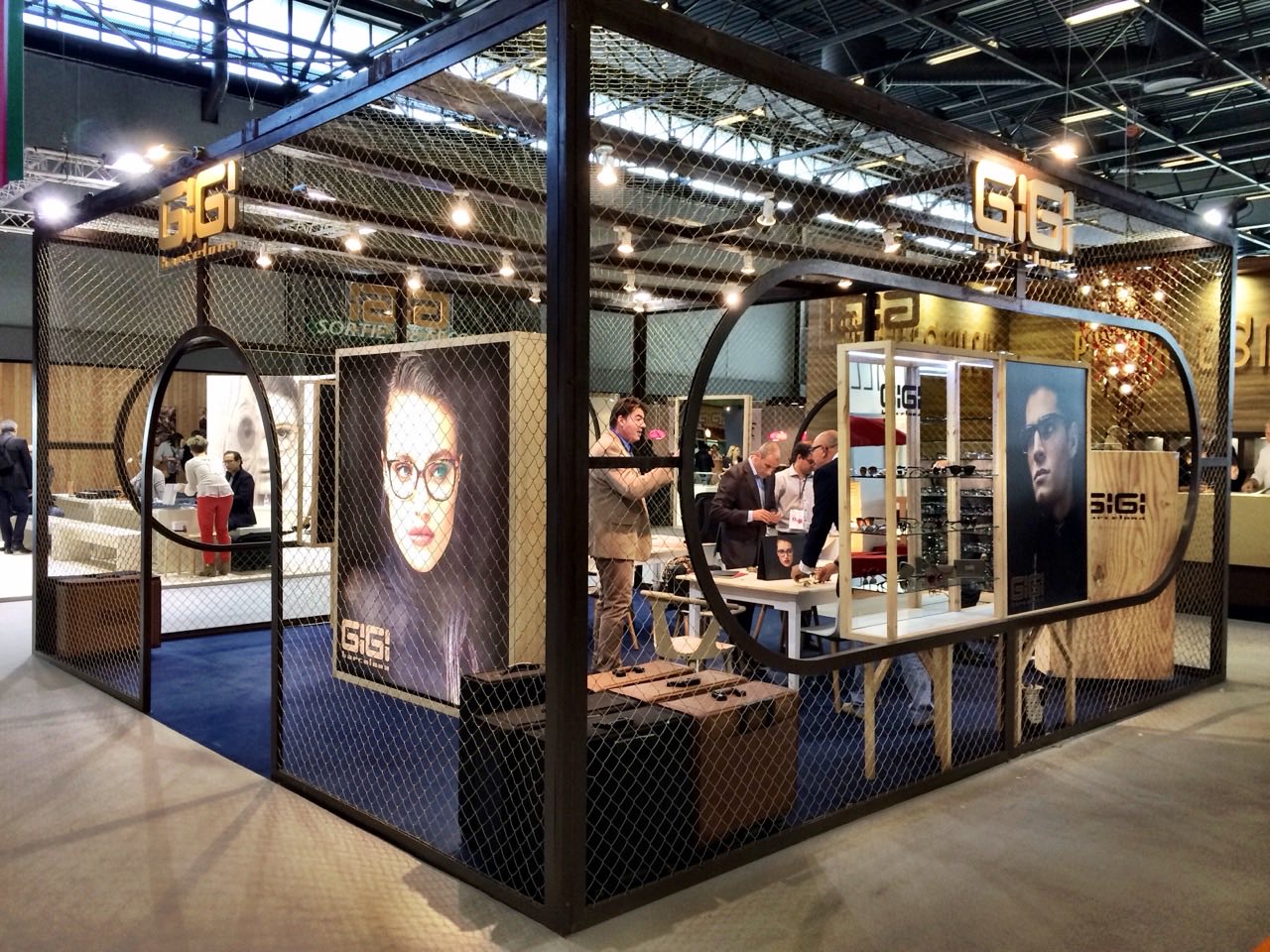
The market is evolving fast. In 2026, several trends are redefining exhibitors' expectations of modular structures.
The visitor experience at the heart of the design
In 2026, new trends are emerging that combine innovative design, immersive technologies and more effective engagement strategies to capture visitors' attention. The best-performing stands are now designed as narrative journeys rather than mere static shop windows. Spatial storytelling takes shape through themed zones, coherent visual supports and staging that guides the visitor smoothly.
Digital in the service of the human
Artificial intelligence is now making its way onto stands to streamline the welcome, enrich the conversation and optimise data collection. That said, the trend in 2026 favours discreet but better-integrated digital: screens embedded in the architecture, lead-qualification kiosks and footfall sensors. Technology enriches the encounter without replacing it.
Verticality as a lever for visibility
In ever-denser halls, making use of height has become essential. Hanging signs, illuminated totems and double-height structures make it possible to be spotted from a distance. High-end modular ranges now incorporate these options without requiring bespoke construction.
Buy or rent: which option to favour?
The question arises for every exhibitor. Both models offer distinct advantages depending on the usage profile.
Buying suits companies attending four or more shows a year. Amortisation is fast and you are guaranteed full control over the design, storage and availability of the stand. To explore this option in more depth, see our guide dedicated to buying: buy a modular exhibition stand.
Renting is ideal for one-off appearances or for companies wanting to test different configurations before investing. It offers maximum flexibility and no storage worries.
In both cases, the support of an experienced stand builder makes the difference. The initial brief, the 3D design, the logistical and regulatory management and then the on-site installation are all stages where expertise avoids nasty surprises.
Mistakes to avoid when choosing a modular stand
Even the best structure produces no results if the project is poorly framed. Here are the most common pitfalls.
Neglecting the initial brief: an effective stand is born from a precise set of specifications. Commercial objectives, brand identity, the show's technical constraints and the overall budget must be defined upfront.
Underestimating the lighting: light structures the space, prioritises the messages and draws the eye. Poorly thought-out lighting considerably reduces the stand's visual impact.
Forgetting to measure performance: number of qualified contacts, appointments booked, demonstrations carried out. Without indicators defined before the show, it is impossible to assess the return on investment.
Choosing the lowest price without assessing durability: a cheap modular stand that only withstands two uses costs more than a higher initial investment amortised over five years.
How to maximise the ROI of your modular stand
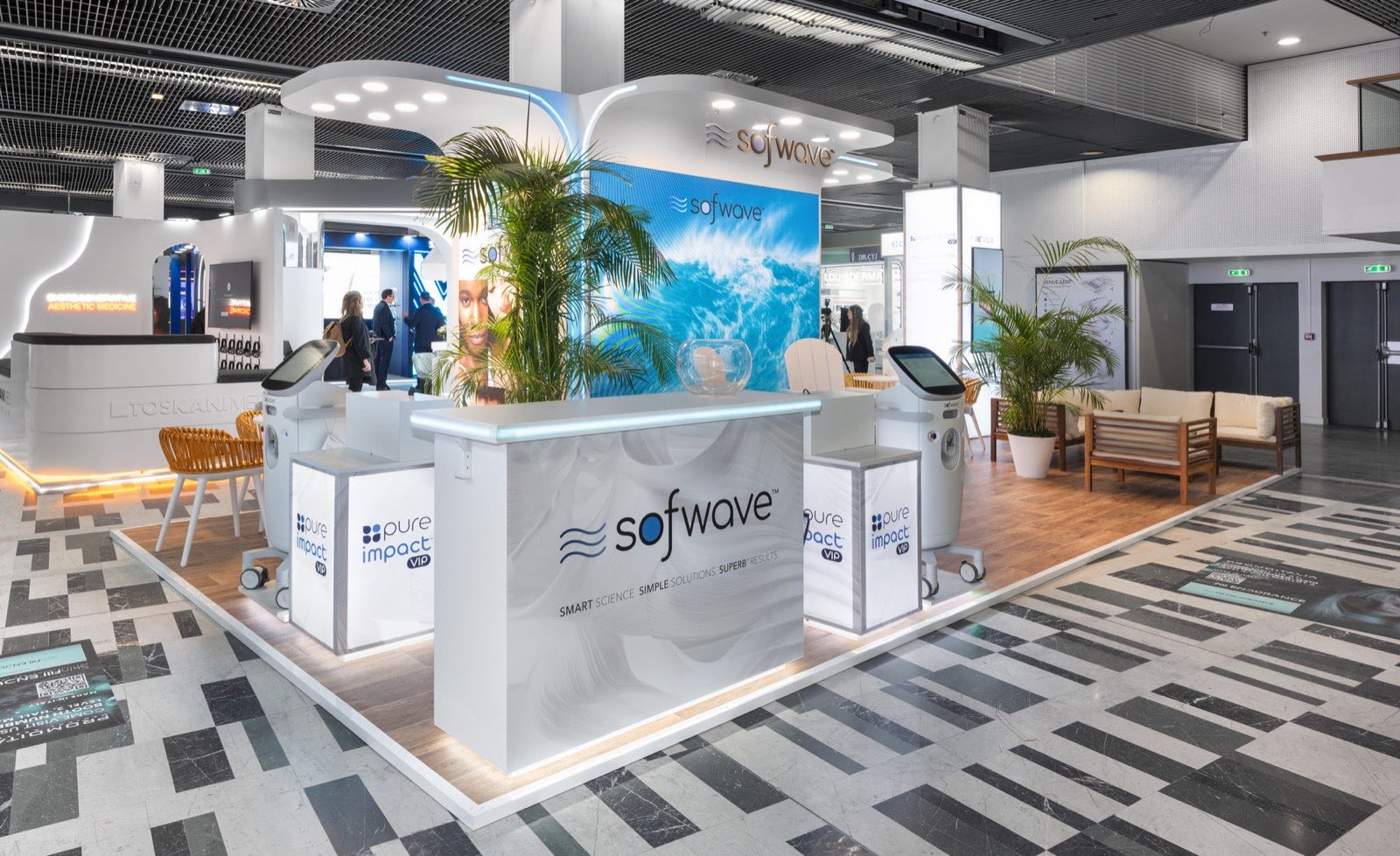
A high-performing stand is not limited to its physical structure. It is an ecosystem that integrates communication before, during and after the show.
Before the event: prepare your targeted invitations, plan your appointments and set up your lead-capture tools.
During the show: focus on a proactive welcome, scripted demonstrations and action-oriented signage.
After the show: follow up with your qualified contacts within 48 hours and measure your performance indicators.
The reusability of the modular stand makes this iterative approach easier. From one event to the next, you adjust your visuals, your layout and your activation strategy based on the lessons learned. Each show becomes an optimisation loop.
Ultimately, the modular stand represents far more than a logistical choice. It is a strategic lever that aligns budget control, design ambition and environmental responsibility.
With more than 20 years of experience, 150 premium projects delivered and a 100% satisfaction rate, our end-to-end support (from the creative brief to post-event storage) guarantees a result worthy of your ambitions. To bring your project to life, discover our modular stand rental offer and talk to our teams.
Frequently asked questions
How many times can a modular stand be reused?
A quality modular stand is designed to be reused for five years or more, provided you ensure regular maintenance and appropriate storage in suitable transport cases. Only the fabric graphics are renewed to match your campaigns.
Can a modular stand rival a bespoke stand visually?
Absolutely. Today's hybrid ranges incorporate high-end materials (wood, glass, metal) and backlit lightboxes that deliver a premium result. Our approach at Decore Studio Events combines precisely the flexibility of modular with the quality of a bespoke design.
What budget should you plan for a professional modular stand?
The budget varies according to the surface area, the level of customisation and the integrated equipment. To obtain a precise estimate suited to your needs, it is advisable to send a detailed brief to your stand builder, including the planned surface area, the number of shows per year and the desired features.
Every project is unique. Tell us about your show, your space and your objectives: we'll come back to you with an initial concept and a detailed quote.